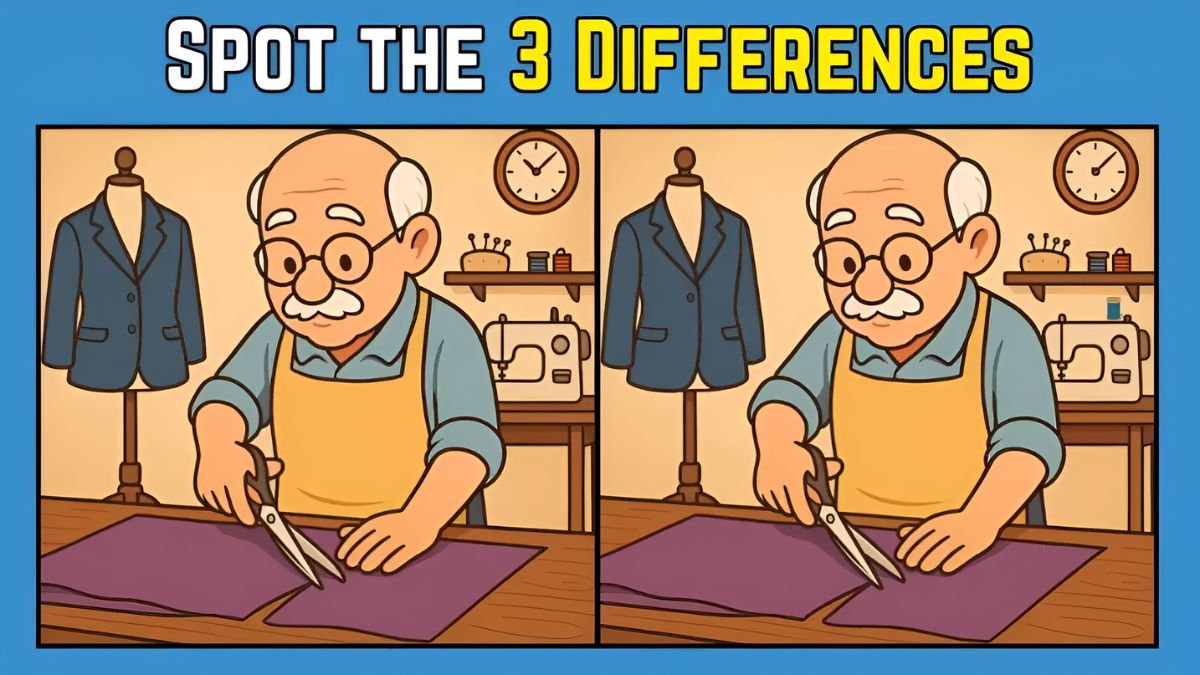
Prepare to put your observation skills to the ultimate test! The 9-second challenge is here, inviting you to spot three differences in an image featuring a tailor cutting cloth. This engaging puzzle not only entertains but also sharpens your cognitive abilities. Are you up for the challenge? Let’s jump in!



What Makes “Spot the Difference” Games So Engaging?
“Spot the Difference” puzzles capture our attention because they stimulate both the mind and senses. The exciting thrill of the challenge lies in discerning subtle differences between two images that seem nearly identical. Every moment spent seeking these differences culminates in a rewarding sense of accomplishment once they’ve all been spotted.
Moreover, these puzzles demand quick thinking and mental sharpness. Our brains naturally seek patterns, so when we identify something out of place—a missing object or minor alteration—we experience an “aha!” moment. This exercise not only boosts cognitive abilities but also enhances focus and attention to detail, making these games excellent brain training tools.


How Does This Tailor “Spot the Difference” Puzzle Challenge Your Mind?
In this particular challenge, you’re presented with two images of a tailor cutting cloth, appearing nearly identical at first glance. Your goal is to identify the three differences in just 9 seconds. This task tests your observation skills and concentration, all under the pressing constraint of time. Can you locate all the differences before the countdown ends?
This game also challenges your working memory and cognitive flexibility. When comparing two similar images, your brain must analyze details carefully, which can lead you to overlook changes if you focus too much on specific aspects. “Spot the Difference” puzzles train your brain to make swift decisions while processing numerous visual details simultaneously.


What Are the 3 Key Differences in the Tailor Cutting Cloth Puzzle?
Let’s explore the differences you need to spot in this puzzle:
1. Where Did the Coat Button Go?
The first difference highlights the coat on the mannequin. In the left image, the coat button is present, while in the right image, it’s gone. Although this missing button may seem insignificant, it significantly alters the scene, requiring careful examination of the mannequin to spot it.


2. What Happened to the Second Hand of the Clock?
The second difference involves the clock in the background. The left image displays the second hand, but in the right image, it’s missing. This small yet notable change introduces a time discrepancy between the two images. By focusing on the clock’s details, you can quickly uncover this missing feature.
3. How Has the Thread Spool Changed?
The third difference is found in the thread spool on the sewing machine’s right side. The left image features a spool with a larger top, while in the right image, the top is smaller. This alteration, while minor, affects the visual composition of the image, requiring a keen eye to detect.
Why Is It So Hard to Spot These Small Differences?
The challenge in “Spot the Difference” puzzles stems from the initial similarity of the images. Our brains instinctively group similar items, making it easy to overlook subtle distinctions. In this instance, the differences are minor, which may lead you to dismiss them as unimportant.
Furthermore, the 9-second time constraint adds pressure. Under such conditions, it’s tempting to rush through the puzzle, hindering your ability to notice minor differences. These challenges effectively train your brain to process information faster while maintaining accuracy.
How Can You Improve Your Ability to Spot Differences Quickly?
If this challenge felt tough, don’t fret—there are effective strategies to enhance your observation skills! Here are some tips to help you spot differences more efficiently:
1. Practice Makes Perfect
Regular engagement with “Spot the Difference” puzzles fosters improvement. Begin with simpler puzzles, gradually advancing to complex ones. Over time, you’ll become more proficient at recognizing patterns and identifying subtle details.
2. Scan the Image Methodically
Approach puzzles systematically. Start from the top left corner and move horizontally across, focusing on one section at a time. This methodical scan ensures you don’t miss any differences.
3. Train Your Brain to Focus on the Small Details
Pay attention to small changes like colors, shapes, or object positions. By honing in on these elements, you’ll enhance your ability to spot differences swiftly.
4. Work on Reducing Time Pressure
While time constraints add excitement, they can also complicate the task. Practice solving puzzles without a timer before introducing one. This gradual method increases your speed without compromising accuracy.
How Do “Spot the Difference” Games Benefit Cognitive Development?
Engaging with “Spot the Difference” puzzles provides several cognitive benefits. They enhance attention to detail, a valuable skill in various life aspects, including problem-solving and reading comprehension. Additionally, these games sharpen memory and concentration, aiding focus and organization in personal and professional tasks.
Furthermore, these puzzles nurture critical thinking skills. Analyzing changes and interpreting visual details develops your overall cognitive function, making it an excellent exercise for your brain.
Final Thoughts: Keep Testing Your Observation Skills!
The “Spot the Difference” puzzle featuring a tailor cutting cloth not only entertains but also engages your mind. These puzzles are fantastic mental exercises that enhance focus, attention to detail, and visual processing speed.
So, the next time you encounter a “Spot the Difference” challenge, remember to stay focused and enjoy refining your cognitive abilities. Whether tackling puzzles solo or with friends, they provide a delightful way to bolster your brain while enhancing your observation skills. Keep practicing to witness your improvement!
Frequently Asked Questions
What are the benefits of playing Spot the Difference games?
Playing these games enhances attention to detail, boosts memory, and sharpens problem-solving skills. They also improve focus and cognitive flexibility, essential for various tasks.
How can I spot differences more quickly?
To spot differences quickly, practice regularly, scan images methodically, and focus on small details. Gradually introducing time constraints can also help improve your speed.
Are Spot the Difference puzzles suitable for all ages?
Yes, these puzzles are suitable for all ages. They challenge children and adults alike while providing cognitive benefits and improving observation skills.
Can Spot the Difference games help with memory improvement?
Absolutely! Engaging with these puzzles enhances memory and concentration, helping you maintain focus and develop better organizational skills.
Where can I find more Spot the Difference puzzles?
You can find Spot the Difference puzzles in magazines, puzzle books, and numerous websites dedicated to brain games and activities.

