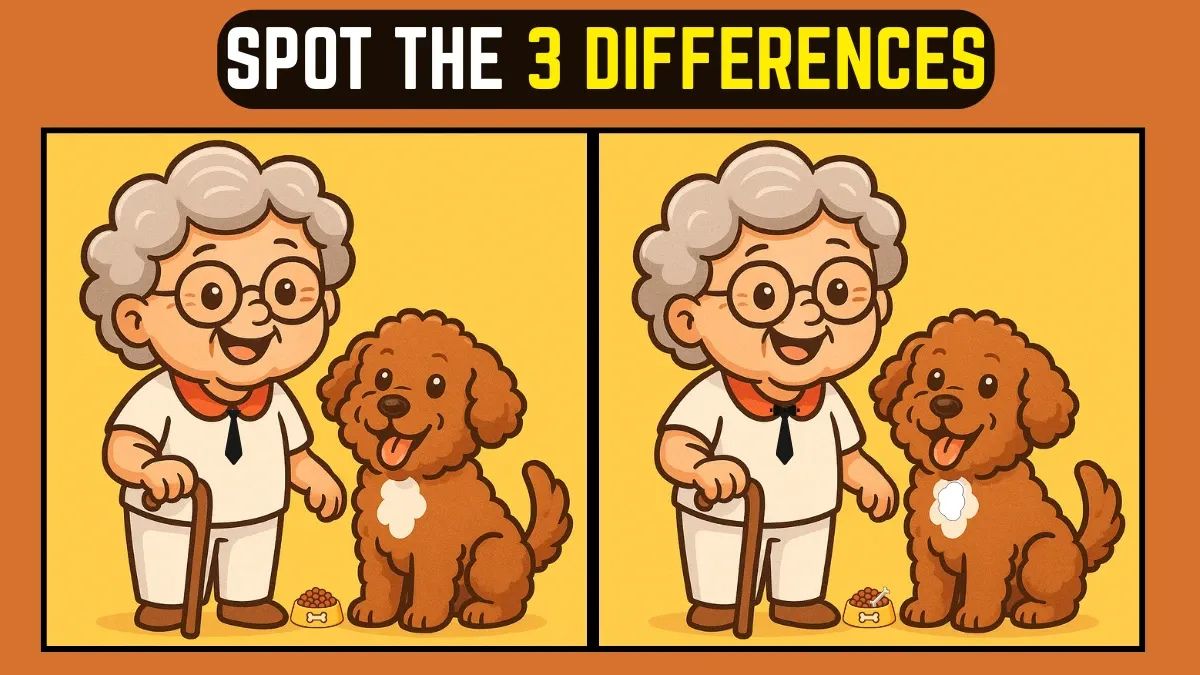
“Spot the Difference” puzzles provide an entertaining and challenging way to engage your observational abilities. In this 8-second challenge, you need to identify three differences between two images of a grandma and her dog. This fast-paced task not only sharpens your attention to detail but also enhances your ability to think quickly under pressure.



The Popularity of “Spot the Difference” Puzzles
“Spot the Difference” puzzles have captivated audiences for years, featuring prominently in books, magazines, and online platforms. These puzzles appeal to people of all ages and serve as a quick mental exercise or a fun way to unwind. Despite their simplicity, they can be surprisingly challenging, as spotting discrepancies requires a keen eye for detail.
Aside from being enjoyable, these puzzles provide a mental workout. They enhance cognitive skills including focus, concentration, visual memory, and pattern recognition. Furthermore, they cultivate the brain’s capability to process visual information rapidly—skills essential for daily problem-solving and multitasking.


Why Is This Puzzle So Challenging?
The task of identifying differences within a limited timeframe demands swift visual processing. In this puzzle, the grandma and her dog may look nearly identical, yet small discrepancies remain hidden in the details. These slight changes challenge your focus and observational skills.
When attempting to spot differences quickly, we often fixate on larger, more distinct elements in the image, missing out on minor details. Some differences are so subtle that they require careful scrutiny to uncover.


The pressure of an 8-second timer amplifies the challenge. You must remain focused while racing against the clock to spot all variations, putting your visual memory and cognitive agility to the test.
How to Tackle the Puzzle: Tips for Spotting the Differences
To successfully navigate any “Spot the Difference” puzzle, attention to detail is key. Here are some effective strategies:


- Focus on Smaller Details: Large objects may not show significant changes. Instead, examine smaller items like accessories or background elements where differences often occur.
- Scan Methodically: Rather than jumping around the image, work through it systematically. Start in one corner and move across the image methodically to ensure you don’t miss discrepancies.
- Look for Color and Shape Changes: Many differences consist of slight variations in color or shape. Pay close attention to clothing, the dog’s position, or any altered objects.
- Stay Calm Under Pressure: The quick time limit can create intensity, but maintaining calmness is crucial. Take deep breaths and concentrate on identifying one difference at a time.
- Practice Makes Perfect: The more you engage with these puzzles, the better you’ll become at spotting differences swiftly. Regular practice enhances your observation skills and visual processing speed.
The Benefits of Playing “Spot the Difference” Puzzles
These puzzles are not only fun but also offer various cognitive benefits. They help improve concentration and focus as you engage with them over time, potentially enhancing performance in tasks that require sustained attention.
Additionally, they sharpen pattern recognition abilities. Consistent practice allows your brain to become adept at noticing subtle visual changes, which proves useful in real-world scenarios like problem-solving or data analysis.
Engaging in these puzzles also boosts visual memory. As you analyze the images, you strengthen your capacity to remember visual details—crucial for activities such as driving, reading, or recognizing faces.
Spot the Differences in the Grandma and Dog Puzzle: What Are the Key Changes?
In this challenge, three nuanced changes distinguish the two images. Here’s a breakdown:
- Grandma’s Collar: The collar has changed in shape and color in the second image, differing from the first image’s collar, making this the first savvy spot.
- Dog Treat Bowl: An additional banana is present next to the dog treat bowl in the second image, providing an easy-to-spot difference once you examine that area closely.
- Dog’s Chest Patch: The chest patch of the dog has a modified shape in the second image, serving as another discernible yet subtle difference.
Identifying these differences requires careful observation and a sharp eye, making the puzzle both a fun and challenging experience.
Conclusion: How Fast Can You Spot the Differences?
In summary, “Spot the Difference” puzzles, such as this one, offer a delightful way to challenge your visual acuity and cognitive skills. Whether you’re racing against the clock or simply enjoy the mental workout, these puzzles foster focus and attention to detail. So, the next time you encounter a puzzle, take a breath, concentrate on the details, and see how quickly you can spot all the differences. It’s an enjoyable and fulfilling way to engage your mind while having fun!
Frequently Asked Questions
What are “Spot the Difference” puzzles?
“Spot the Difference” puzzles are visual challenges where you identify discrepancies between two almost identical images. They help improve observational skills.
How do “Spot the Difference” puzzles benefit my brain?
These puzzles enhance cognitive functions like focus, memory, and pattern recognition, providing a fun way to mentally engage and develop your observational skills.
Can I practice “Spot the Difference” puzzles online?
Yes! Numerous websites and apps offer “Spot the Difference” puzzles, allowing you to practice them anytime and anywhere.
How can I get better at “Spot the Difference” puzzles?
Regular practice enhances your ability to spot differences quickly. Use specific strategies such as focusing on details and staying calm to improve your skills.
Are there different levels of difficulty in “Spot the Difference” puzzles?
Absolutely! These puzzles come in various difficulty levels, accommodating both beginners and more experienced puzzlers.

