The start of the new year brings significant changes for the public, especially for families reliant on ration cards and cooking gas. From January 1, 2026, new rules will come into effect that could greatly impact millions of low- and middle-income households across the country. The government aims to enhance transparency and eliminate fraudulent beneficiaries in the ration distribution and gas subsidy processes. Understanding these changes is essential for those who benefit from these services.



Failure to comply with the new regulations could result in removal from the beneficiary list and interruption of subsidies. Let’s delve into the four new rules that are set to influence your budget for groceries and gas.
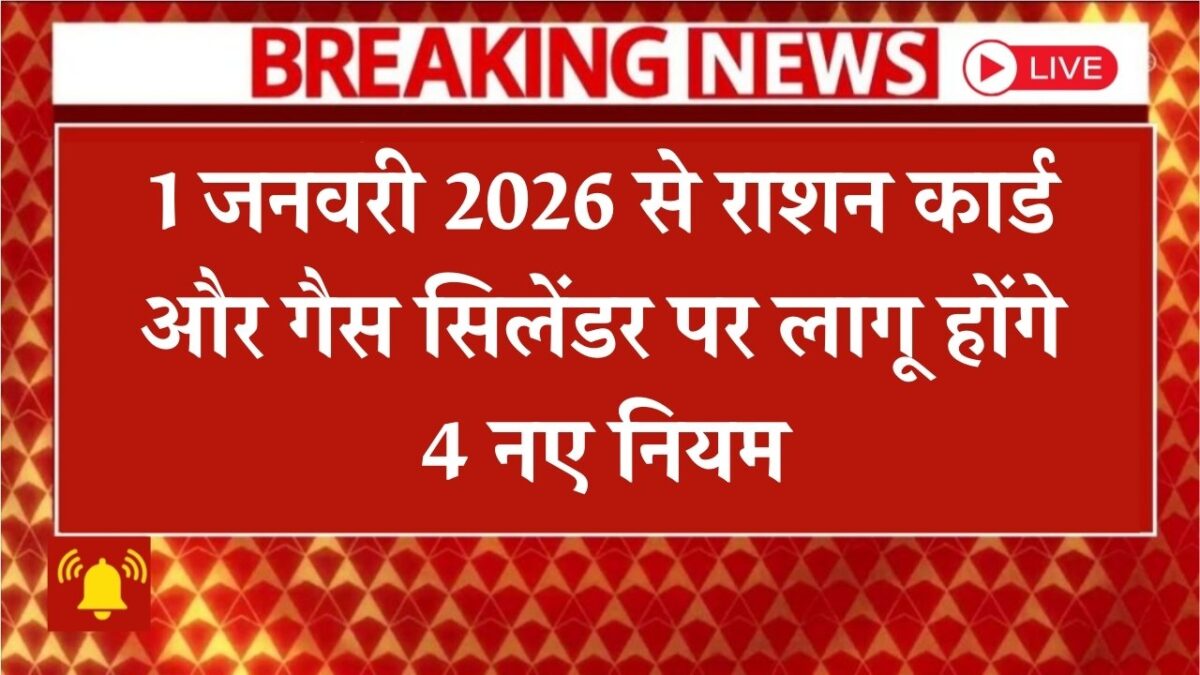
1 जनवरी 2026 से राशन कार्ड और गैस सिलेंडर पर लागू होंगे 4 नए नियम
In accordance with directives from central and state governments, new guidelines have been issued for beneficiaries under the Public Distribution System (PDS) and the Pradhan Mantri Ujjwala Yojana. The primary objective of these rules is to streamline the “One Nation, One Ration Card” scheme and entirely eliminate fraud in gas distribution.


Scheme Name: Ration Card and LPG Gas New Rules 2026
Effective Date: January 1, 2026
Main Beneficiaries: Ration card holders and gas connection holders
Mandatory Process: Aadhar e-KYC and biometric verification
Key Changes: Modifications in ration quotas and new subsidy rules
Objective: Prevent fraud and benefit eligible individuals
Official Website: nfsa.gov.in and pmuy.gov.in
Helpline Numbers: 1967 (Ration) and 1800-266-6696 (Gas)
1. Ration Card for e-KYC Requirement
The foremost rule pertains to e-KYC. The government has clarified that ration cards may be canceled for those holders who have not completed Aadhar verification for all family members. Starting January 1, 2026, only individuals linked to Aadhar will be eligible to receive ration.


Each family member will need to visit the ration shop to provide biometric fingerprints. If any member resides elsewhere, they can complete verification at any nearby government ration shop under the One Nation One Ration Card scheme.
2. Annual Verification for Cooking Gas Subsidy
The second major change involves the gas cylinder subsidy. Customers under the PMUY and regular gas consumers must complete annual e-KYC to maintain their subsidies. If consumers do not complete this process by December 31, 2025, they will have to purchase cylinders at market rates come January 1.


The government recognizes that many consumers change addresses or hold multiple connections under a single name. The digital verification will ensure that only active and eligible consumers receive subsidies. This can be done for free at the gas agency’s app or by visiting the nearest distributor.
3. New Changes in Ration Quantities and Items
The third rule concerns the quantity and type of ration provided. In many states, records will now include not just rice and wheat but also sugar, salt, and lentils at subsidized prices. Furthermore, the government is updating the software in ration distribution machines for better efficiency.
Starting next year, ration quantities will be digitally adjusted based on your card type (for example, Antyodaya or Priority Household). This will help eliminate complaints about reduced rations, as electronic scales will be integrated into the machines to tackle short weights.
4. Campaign to Remove Ineligible Beneficiaries
The fourth rule addresses individuals receiving benefits despite being ineligible. As of January 1, 2026, ration cards will be blocked for those owning four-wheeled vehicles, having government jobs, or exceeding income thresholds. The government will identify such individuals using data from the Income Tax Department.
Additionally, families that have not collected rations in the past six months will have their cards deactivated. This step is intended to allow new and poorer families to access the ration card list. Special surveys in rural and urban regions will be conducted to facilitate this change.
Precautions and Necessary Suggestions:
- Double-check names and dates of birth on your ration and Aadhar cards.
- Visit your gas agency to link your active mobile number and bank account.
- Complete the KYC process without waiting for the last date.
- Do not share your OTP or personal information with strangers.
Conclusion
The upcoming changes to ration cards and gas cylinders beginning January 1, 2026, are crucial for enhancing efficiency and curbing fraud. Stay informed about these new regulations to avoid disruptions to your benefits. By ensuring compliance with the e-KYC requirements and understanding the updates to the subsidy and ration distribution processes, you can secure your entitlements.
Frequently Asked Questions
What is the main objective of the new ration card rules effective January 1, 2026?
The main objective is to streamline the distribution process by implementing e-KYC verification to eliminate fraud and ensure that benefits reach eligible individuals.
How does the e-KYC process work for obtaining ration?
Individuals must link their Aadhar numbers and complete biometric verification at their local ration shop to continue receiving rations.
What should gas consumers do to maintain their subsidy?
Gas consumers must complete their annual e-KYC by December 31, 2025, to avoid purchasing cylinders at market prices.
What will happen to ineligible beneficiaries under the new rules?
Ration cards of individuals found to be ineligible will be blocked, especially those with higher incomes or assets like vehicles.
How can one ensure compliance with the new rules?
It’s essential to check details on your ration and Aadhar cards, link your mobile and bank accounts at gas agencies, and expedite the KYC process.

