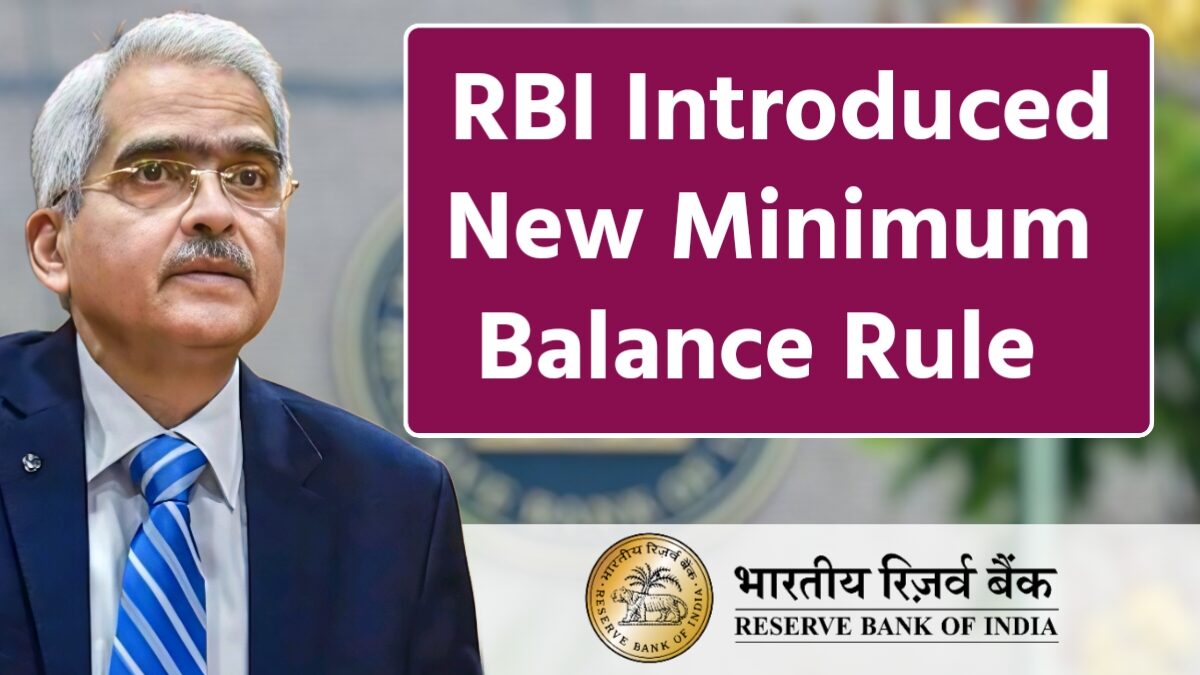
The Reserve Bank of India (RBI) has unveiled new minimum balance rules for bank accounts, set to take effect from December 31, 2025. This decision represents a fundamental change in the way Indian bank customers handle their finances. For years, minimum balance requirements varied across banks, leading to confusion and unexpected penalties for many customers, often due to a lack of understanding of complex conditions.



This regulatory change aims to bring clarity and consistency to banking practices across the country. With these new guidelines, savings account holders in urban regions must maintain an average monthly balance of ₹3,000, while those in rural and semi-urban locales are required to maintain ₹1,500. Standardized slabs for current accounts will also be implemented based on geographic location. This significant update is crucial as it impacts households, pensioners, small businesses, and rural customers in managing their cash flow effectively.
Why RBI Moved Towards Uniform Minimum Balance Rules
The implementation of standard minimum balance rules reflects the evolving landscape of India’s banking sector over the past decade. Despite the rapid rise of digital transactions, banks continue to incur high costs associated with operations, staffing, security, and cash management. Previously inconsistent minimum balance norms led to customer dissatisfaction and confusion, particularly when penalties were applied without adequate warning.


To promote fairness and transparency, the RBI’s uniformity initiative ensures that customers have a clear understanding of what is expected of them, regardless of their bank choice. The intention is to empower informed customers capable of making wise financial decisions. Instead of relying on previous ambiguity, the new regulations enable individuals to select account types that align more closely with their income and spending patterns.
Impact on Households, Pensioners, and Rural Customers
Urban salaried households may find the impact of these new rules minimal. Regular salary deposits can often sustain balances above the requisite thresholds. However, pensioners and rural clientele may experience more significant challenges, as many of these accounts predominantly receive government benefits, pensions, or subsidies which are quickly withdrawn, making it tough to maintain the minimum average balance.


Consumer advocates emphasize that the key issue lies in customer awareness rather than the minimum balance figure itself. Small penalties can significantly burden fixed-income individuals. While zero-balance accounts remain an option, a lack of information may prevent eligible customers from exploring these beneficial avenues. Without proper guidance from banks, the anticipated simplification of banking procedures for vulnerable populations may lead to greater frustration, especially in rural areas.
Effect on Small Businesses and Current Account Holders
Small business owners and self-employed workers are particularly concerned about the implications of these new rules. Current accounts, inherently designed for frequent transactions, now mandate minimum balances ranging from ₹12,000 to ₹30,000 based on location, potentially straining businesses with fluctuating cash flows. Traders and shopkeepers heavily depend on daily turnover, complicating their ability to maintain a fixed financial buffer.


While some experts argue that these changes could promote enhanced cash management practices and formal accounting, others caution that businesses might resort to utilizing digital wallets or payment banks to bypass penalties. Although this shift might decrease idle cash, it may hinder proper transaction histories, complicating future loan approvals and financial assessments crucial for small enterprises.
How Banks Are Preparing for the December 10 Deadline
In anticipation of the new rules, banks are actively refining their systems. Core banking infrastructures are being enhanced to ensure accurate tracking of average monthly balances. Additionally, mobile banking apps will introduce visual alerts to notify customers when they are nearing minimum balance thresholds. Bank staff are also receiving training to communicate these changes effectively, helping to alleviate any potential concerns among account holders.
Furthermore, banks are promoting alternative account types, such as digital-only savings accounts with lowered balance requirements, along with zero-balance accounts in their outreach initiatives. Bank officials recognize that for RBI’s policy to be successful, it is vital that customers receive adequate education and support to facilitate a seamless transition.
Public Response and Future Outlook
Public opinion on the RBI’s recent announcement has been varied. Many urban customers appreciate the elimination of confusing bank-specific rules and the associated fees. However, rural users, pensioners, and small savers have raised significant concerns, leading to calls for exemptions or relaxed standards for accounts linked to pensions and government benefits.
Economists consider these minimum balance rules as a stepping stone toward a future with even more significant changes. As digital banking continues to flourish and reliance on physical branches diminishes, upcoming regulations may favor low-cost, digital accounts with minimal balance requirements. For the time being, the RBI appears focused on monitoring adaptability among customers and banks, with forthcoming data likely guiding whether additional adjustments or exemptions will be introduced.
Disclaimer: This article is for informational purposes only. Minimum balance requirements, penalties, and account features may vary by bank policies and customer profiles. Readers should confirm the latest regulations with their respective banks or reference official RBI communications before making financial decisions.
Frequently Asked Questions
What are the new minimum balance requirements set by RBI?
Effective December 31, 2025, urban savings account holders must maintain an average monthly balance of ₹3,000, while rural and semi-urban customers need ₹1,500.
How will these changes impact pensioners?
Pensioners may find it challenging to maintain the new minimum balance requirements, as many rely on accounts mainly for pension deposits that are withdrawn shortly after.
Are there options for zero-balance accounts?
Yes, zero-balance accounts are available; however, many eligible customers may not be fully aware of these options. Banks must ensure customers are informed about them.
What will banks do to support customers during this transition?
Banks are upgrading their systems to track balances accurately and enhancing customer service training to effectively communicate new policies and available account options.
What could be the long-term effects of these new rules on small businesses?
Small businesses may experience increased cash management needs, leading some to shift funds to digital wallets to avoid minimum balance penalties. This could impact their creditworthiness in the long run.

